
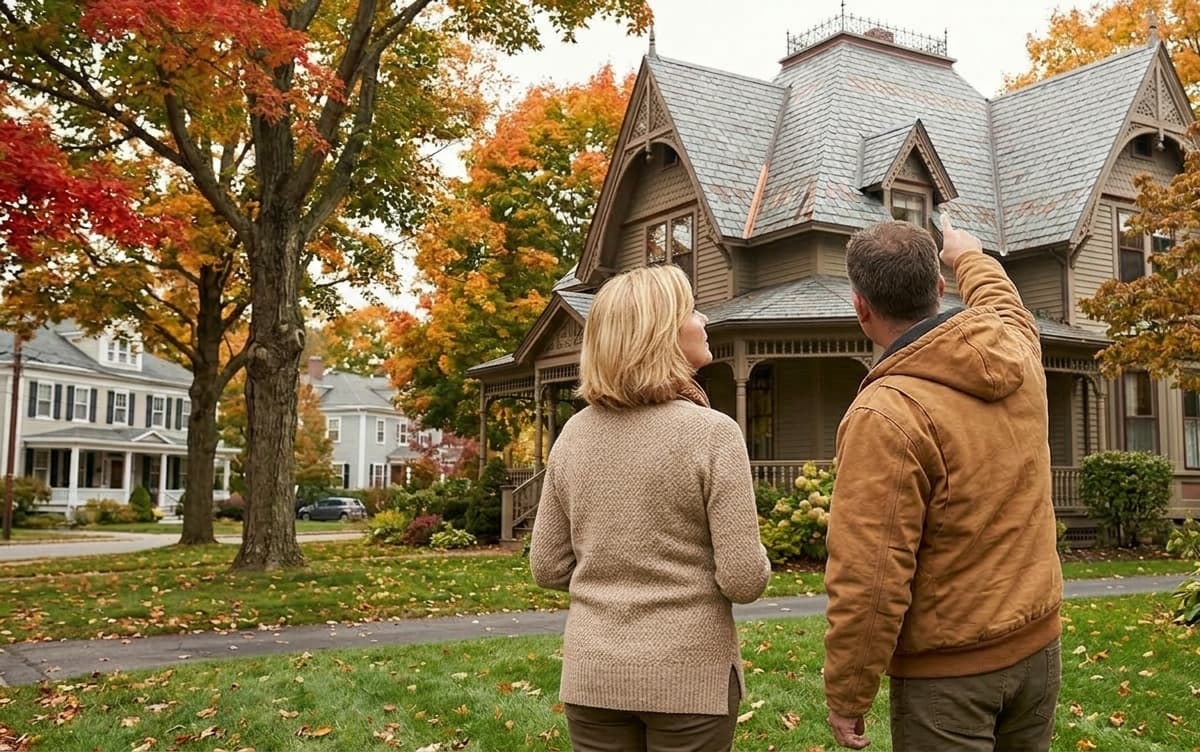
Most homeowners hire a roofer the way they hire a plumber in an emergency — under pressure, without much time to think, and hoping for the best. That’s understandable. But roofing is not a plumbing call. It’s one of the most expensive decisions you’ll make about your home, and if you’re in an older property — a Victorian, a colonial, a farmhouse with original materials — the stakes are even higher. A bad roof job doesn’t just leak. It can destroy irreplaceable materials, void historic preservation tax credits, and create structural problems that take years to show up and cost far more to fix.
So before anyone gets on your roof, here are five things your contractor should be willing to tell you — clearly, in writing, without any arm-twisting.
1. Who, specifically, will be doing the work.
This matters more than people realize. A lot of roofing companies in Connecticut and the Hudson Valley operate essentially as sales organizations. They send out a smooth salesperson, take the deposit, and then subcontract the actual labor to whoever is available that week. You may never meet the crew until they show up on your roof.
Ask directly: “Will you be using your own employees or subcontractors?” There’s nothing inherently wrong with subcontractors — some are excellent — but you deserve to know, and you deserve to verify that whoever is working on your home is licensed, insured, and has experience with your specific material. Slate and copper work especially require a skill set that most general roofers simply don’t have. The wrong crew on a slate roof will crack more slates than they replace.
“The wrong crew on a slate roof will crack more slates than they replace. Know who is getting on your roof before you sign anything.”
2. What happens to the material they remove.
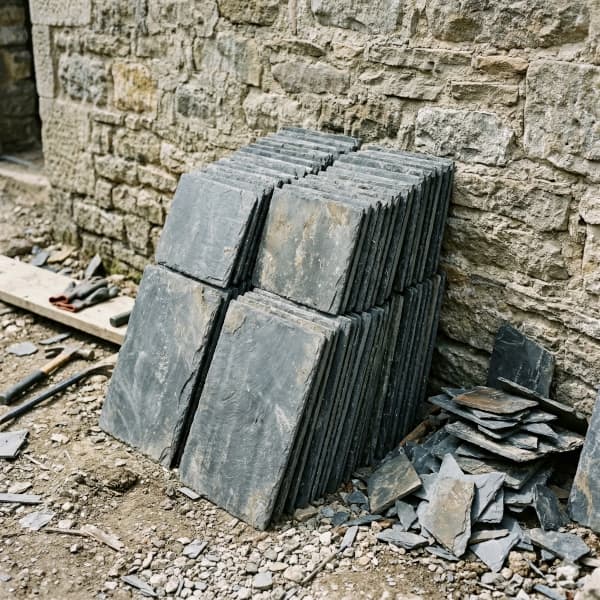
On a historic property or a high-quality slate roof, what comes off your roof can be quite valuable. Reclaimed Vermont or Pennsylvania slate is in demand for repairs on other historic homes. If your contractor is planning to dump everything in a roll-off and haul it away, ask why. On a legitimate partial repair or restoration, salvageable material should be set aside, catalogued, and either reinstalled where appropriate or offered back to you.
The answer to this question also tells you something about how carefully the crew works. Contractors who care about material recovery tend to care about the job overall.
3. What the warranty actually covers — and for how long.
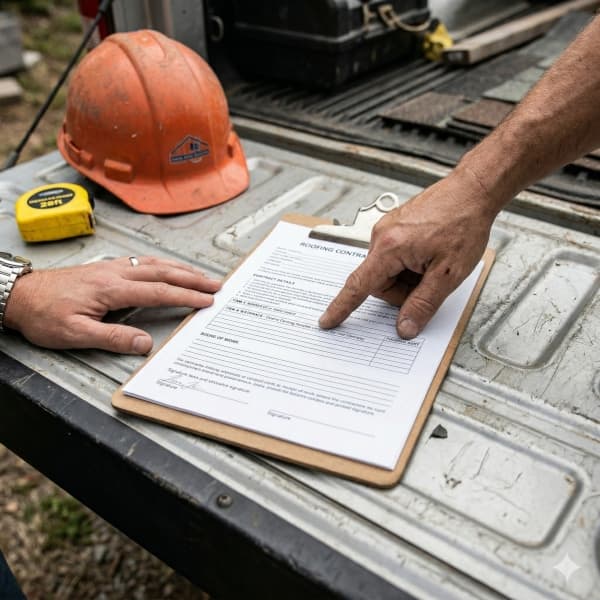
Roofing warranties are frequently misunderstood by homeowners and occasionally misrepresented by contractors. There are two distinct types: the manufacturer’s warranty on materials, and the contractor’s workmanship warranty. A 50-year shingle warranty sounds impressive until you realize it only covers the shingle itself, not the installation, and often comes with so many conditions that making a claim is nearly impossible.
Ask for the workmanship warranty in writing. A contractor who stands behind their work should be willing to commit to a multi-year labor warranty. Ask what voids it. Ask who you call if there’s a problem three years from now. If the answers are vague, that’s information.
4. What their license and insurance actually covers.
In Connecticut, roofing contractors are required to hold a Home Improvement Contractor (HIC) registration. For new construction, a Home Improvement Contractor license may not be sufficient — you may need a licensed contractor with specific classifications. Insurance should include both general liability and workers’ compensation. Ask for certificates, not promises. Your homeowner’s insurance carrier can tell you exactly what documentation to require.
If a contractor seems annoyed by this question, that’s a red flag, not a reason to let it go.
5. What they’re not going to do.
This is the one most homeowners never think to ask, and it’s often the most revealing. Every roofing job has a defined scope, and what’s outside that scope matters just as much as what’s inside it. Will they replace the flashing, or just the shingles? Will they inspect and repair the underlying deck, or just lay new material over whatever’s there? Will they address the ridge cap and hip details, or leave those for later?
A thorough contractor should walk you through the full scope and explain clearly what they will and won’t be doing. If they’re doing a partial repair on a slate roof, which individual slates are being replaced and why? If they’re working on copper flashing, are they soldering the seams or just caulking them? (Caulking is a temporary fix. Soldering is the correct approach.) These details determine whether your roof lasts another 50 years or gives you problems within five.
Getting straight answers to these questions doesn’t make you a difficult customer. It makes you an informed one. Any contractor worth hiring will respect it.
If you’d like a free roof assessment from a crew that will actually answer these questions — and put the answers in writing — we’re available throughout Connecticut and the Mid-Hudson Valley. Reach out through the contact form or give us a call.